
In This Section
Maths
At Marie Weller, our goal of our Mathematics curriculum is to ensure that all children have access to a curriculum which is effectively structured, carefully planned and sparks their natural curiosity.
Through challenging and engaging lessons, we seek to maximise the development of every child’s ability and academic achievement. Our goal is for all children to develop their mathematical fluency in order to master key knowledge and be able to make connections across mathematical concepts. In doing so they will have the tools, confidence and perseverance to reason mathematically and solve increasingly sophisticated problems.
We intend for our pupils to be able to apply their mathematical knowledge to other subjects and know that the subject is essential to everyday life.
The Foundation Stage
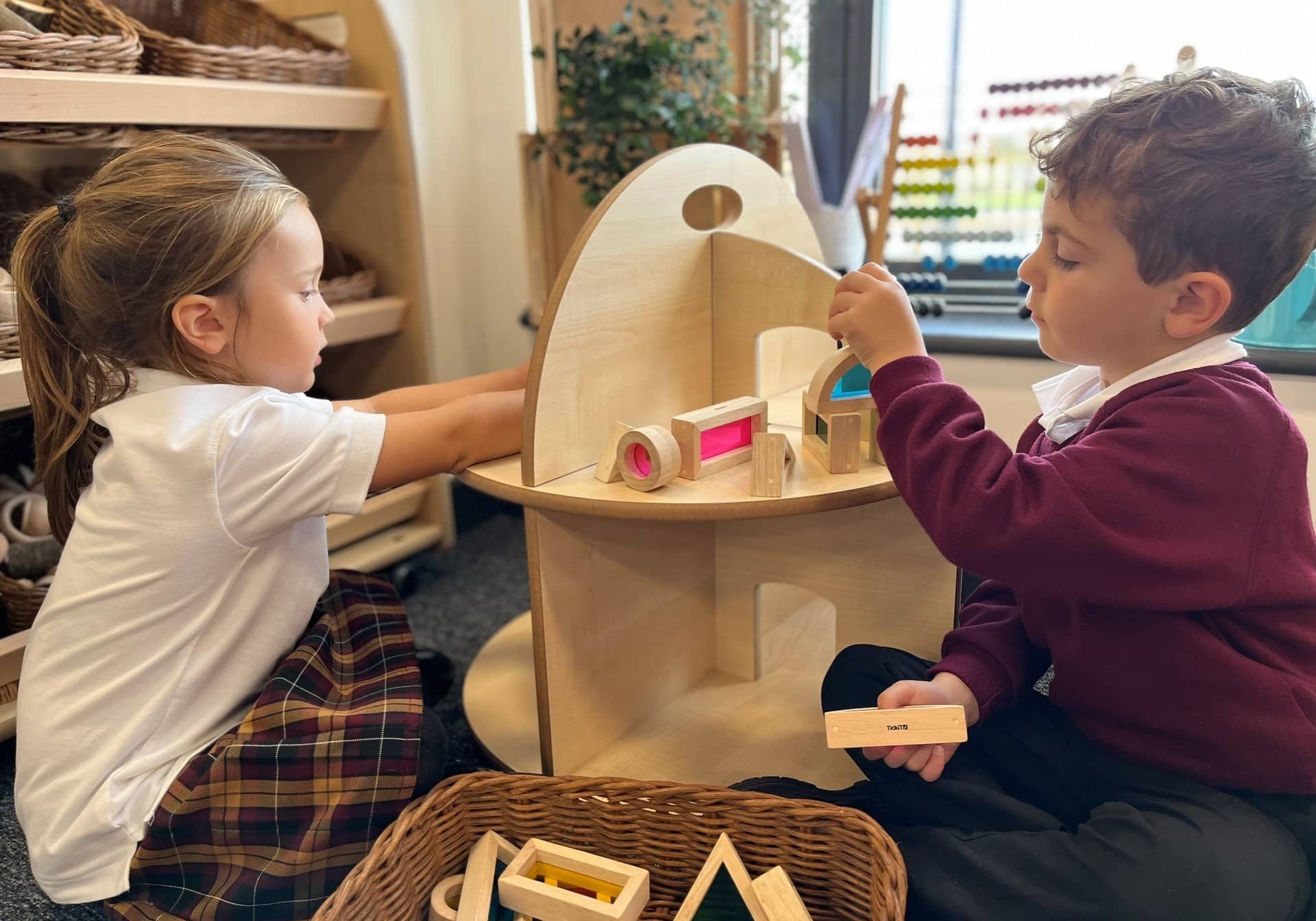
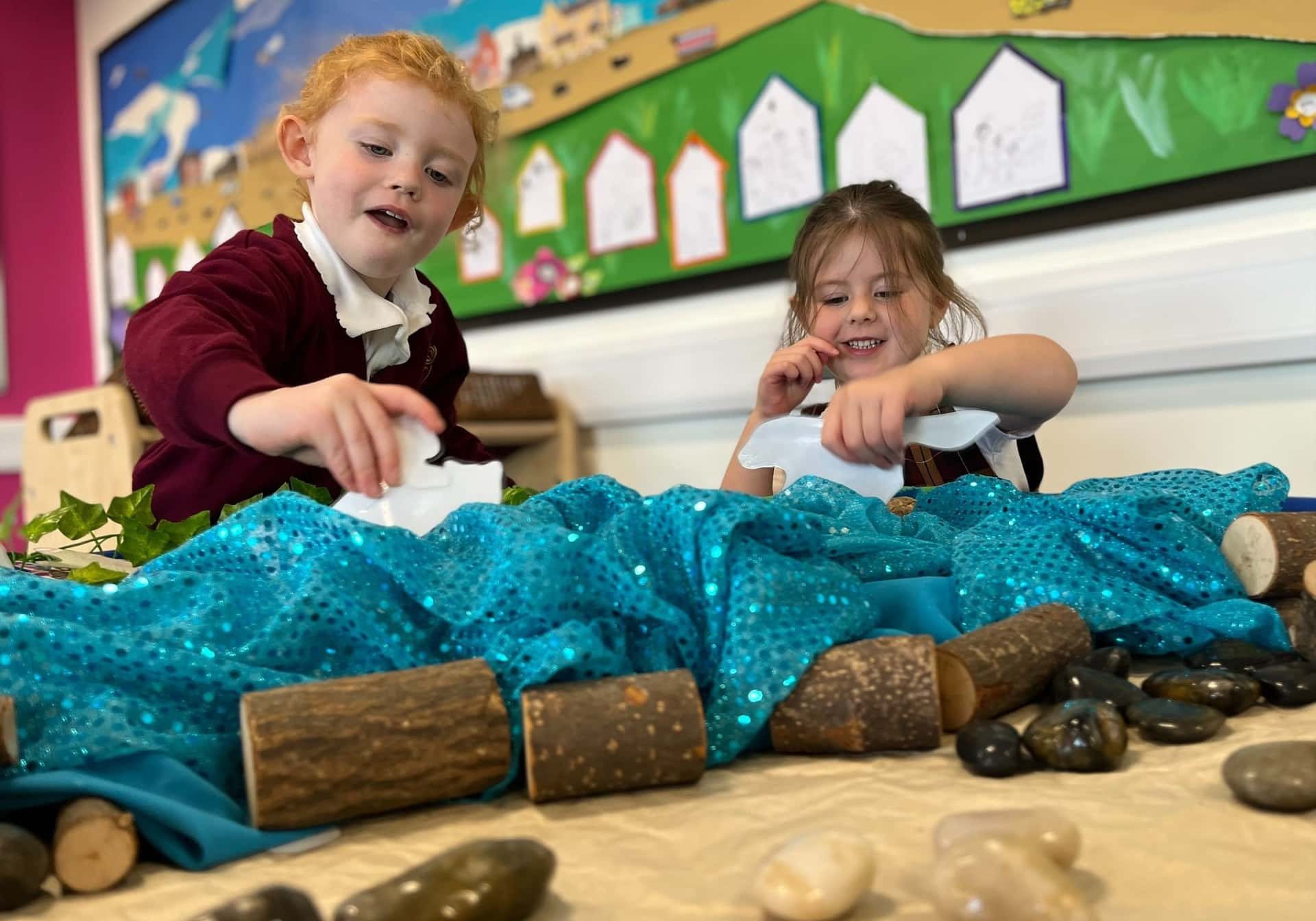
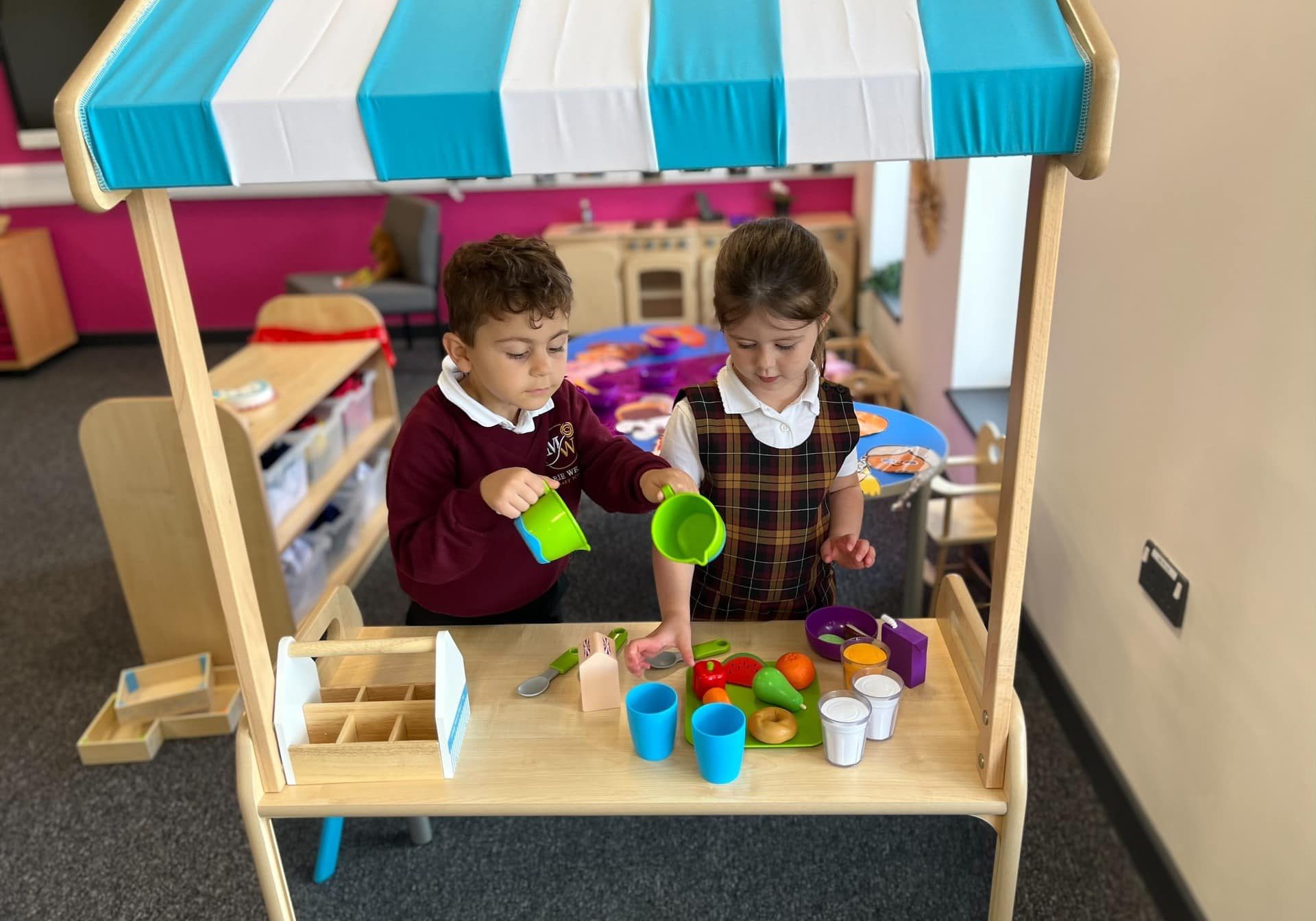
In the Foundation Stage pupils are encouraged to develop their skills of Number and Shape Space and Measure in a broad range of contexts in which they can explore, learn, enjoy, practise, discuss and extend their skills. Pupils are encouraged to exploit their mathematical potential in both indoor and outdoor environments. They are provided with a wide range of activities that promote regular active participation, exploration of real life problems, development of imaginative play and early experience of mathematical language. All pupils are supported positively and encouraged to gain confidence and competence in their skills
Intent
Mathematics is an important creative discipline that helps us to understand and change the world. We want all pupils at Marie Weller Primary School to experience the beauty, power and enjoyment of Mathematics and develop a sense of curiosity about the subject with a clear understanding.
At Marie Weller we foster positive ‘can do’ attitudes and we promote the fact that ‘We can all do Maths!’ We believe all children can achieve in Mathematics and teach for secure and deep understanding of mathematical concepts through manageable steps. We use mistakes and misconceptions as an essential part of learning and provide challenge through rich and sophisticated problems.
At our school, the children will spend time becoming true masters of content, applying and being creative with new knowledge in multiple ways. We believe a pupil really understands a mathematical concept, idea or technique if they can describe it in their own words; represent it in a variety of ways; explain it to someone else; make up their own examples (and non-examples) of it; see connections between it and other facts or ideas; recognise it in new situations and contexts and make use of it in various ways, including in new situations
We aim for all pupils to:
- become fluent in the fundamentals of mathematics so that they develop conceptual understanding and the ability to recall and apply knowledge rapidly and accurately.
- be able to solve problems by applying their mathematics to a variety of problems with increasing sophistication, including in unfamiliar contexts and to model real-life scenarios
- reason mathematically by following a line of enquiry and develop and present a justification, argument or proof using mathematical language.
- have an appreciation of number and number operations, which enables mental calculations and written procedures to be performed efficiently, fluently and accurately to be successful in mathematics.
Implementation
We ensure that the Teaching for Mastery approach (coherence, variation, mathematical thinking, careful use of representations and structures) is fully embedded in our Maths teaching. Our progression framework (taken from Power Maths WRM Edition) ensures that skills and knowledge are built on year by year and sequenced appropriately to maximise learning for all children. Maths lessons are broken down into small, sequenced learning steps that gradually expose the mathematical concept; ensuring learning is accessible to all children. We use varied concrete, pictorial and abstract representations alongside each other to carefully expose the mathematical structure and ensure our children can move flexibly between different representations and mathematical ideas. Each lesson will provide opportunities for the children to reason and solve mathematical problems. Challenge is visible throughout the whole session, where children are asked to reason and prove their understanding at a deeper secure level.
Independent learning activities will include three main elements: Do it! Twist it! and Deepen it!
Do it! activities focus on ‘What it is’. The children will solve standard and non-standard examples.
Twist it! activities focus on ‘What it is not’ in order to address misconceptions.
Deepen it! activities focus on solving problems, applying knowledge and making connections.